The Hidden Secret Behind How to Make Body Cream That Feels Luxury (Most People Don’t Know This Yet)
Understanding the Real Meaning of How to Make Body Cream
When people search how to make body cream, they often imagine it as a quick step-by-step recipe. But the truth is deeper. Making a body cream is about understanding how ingredients blend, melt, and come together to form something your skin drinks in. When someone asks how to make body cream, they are really asking how to create moisture that stays longer, feels softer, and smells personal. Many tutorials online show how to make body cream but skip the small details that change everything.
The second part of knowing how to make body cream is understanding the balance between oils and butters. You may see shea butter, cocoa butter, coconut oil, and carrier oils being mentioned everywhere. But when you learn how to make body cream correctly, you realize each ingredient has a purpose. One adds smoothness. One adds thickness. One adds absorption. This is why real knowledge matters. Without it, even if you learn how to make body cream, the result will feel oily or heavy.
The final thing to remember is that how to make body cream is not only a skill but also a reflection of personal preference. Your skin type, your environment, your climate, and even your lifestyle influence the formula. Someone living in a dry region learns how to make body cream differently than someone in a humid area. Once you understand this, your cream becomes yours—not copied, not random, but designed.
Choosing Ingredients When Learning How to Make Body Cream
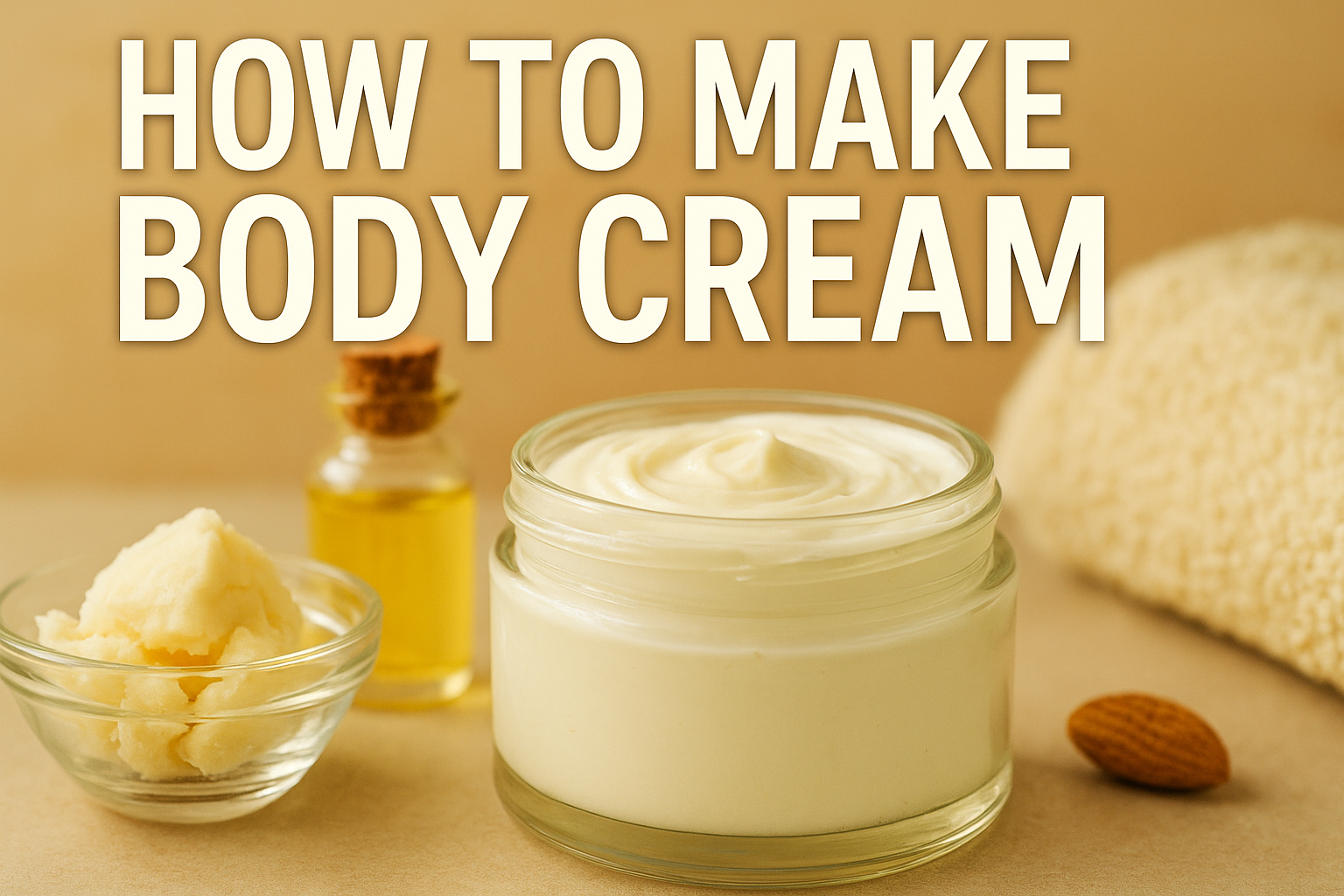
When someone starts learning how to make body cream, they are immediately introduced to butters like shea butter and cocoa butter. Shea butter is soft, creamy, and deeply moisturizing, making it essential in how to make body cream. Cocoa butter is firmer and adds a rich thickness that feels stable. If you skip these, how to make body cream loses its texture and becomes just an oil. So, when you ask how to make body cream, your first step is choosing these core ingredients.
Then comes the role of oils. Almond oil, jojoba oil, olive oil, argan oil, and coconut oil are common names when discussing how to make body cream. Oils determine how well the cream absorbs and spreads. If your question is how to make body cream for soft, silky skin, almond and jojoba are excellent. If you want deeper nourishment, coconut or olive works better. This shows that how to make body cream always depends on what your skin needs.
Essential oils add the final touch. Lavender, rose, peppermint, vanilla, and even eucalyptus can appear when exploring how to make body cream. They do not just add fragrance; they add mood and sensation. When someone truly learns how to make body cream, they understand fragrance is not decoration—it is the emotion inside the cream.
Melting and Combining When Practicing How to Make Body Cream
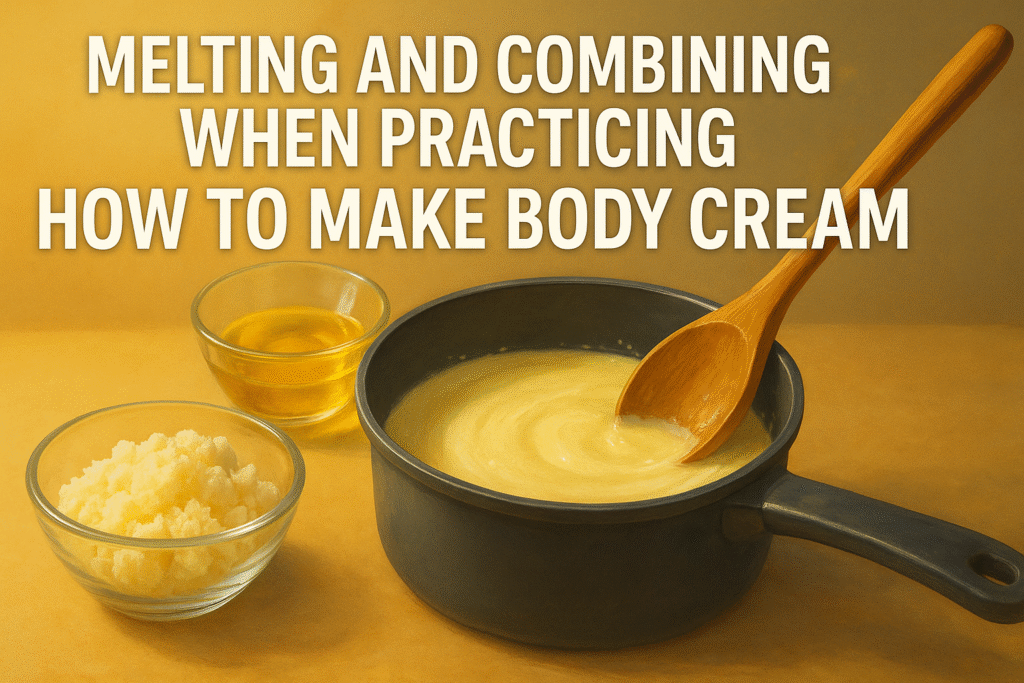
One of the most misunderstood steps in how to make body cream is melting. People rush. But if you rush, the cream separates later. When learning how to make body cream, melt your butters slowly using gentle heat. This ensures the structure remains smooth. If the heat is too high, how to make body cream becomes unstable.
After melting, slowly add oils and stir. Do not shake. Do not whip yet. The key in how to make body cream is patience. Stirring allows the mixture to stay uniform and balanced. When beginners say their cream feels greasy, it usually means they rushed this stage. Knowing how to make body cream means respecting time.
Cooling comes next. Place the mixture aside until it thickens slightly before whipping. This is where how to make body cream becomes creamy instead of runny. Whipping introduces air, giving a softer, lighter touch. People who understand how to make body cream well do not skip this step. This is how the cream achieves that luxurious, cloud-like feel.
Preservation and Freshness in How to Make Body Cream
When researching how to make body cream, many ignore preservation. But any cream with water must have a preservative. If you skip it, bacteria forms—even if you do everything right. So, when learning how to make body cream, always decide whether to use water or not. If you avoid water, you avoid preservatives. If you include water, you must add one. Without it, your journey of how to make body cream will lead to spoiled results.
You can store your cream in airtight containers. Those who master how to make body cream know to avoid sunlight, heat, and moisture. Temperature changes affect texture. So keep your cream at room temperature. When done right, your understanding of how to make body cream ensures a product that lasts weeks or even months.
Click Best Info Trusted Info Click Now
Fragrance and Personalization in How to Make Body Cream
The beauty of learning how to make body cream is personalization. You choose scent. You choose texture. You choose how light or thick you want it. No store-bought cream can match that. This is why so many people are now searching how to make body cream today. It allows creativity and personal connection.
When adding fragrance, always start small. Anyone who truly studies how to make body cream knows essential oils are powerful. Too much can irritate skin. So add slowly, test, and adjust. The real mastery of how to make body cream comes when your cream feels like it belongs to you.
Final Summary
So now, you understand that knowing how to make body cream is not just mixing ingredients. It is understanding texture, balance, scent, skin type, melting stages, and patience. When you deeply learn how to make body cream, your cream becomes soft, rich, lasting, and personal. The journey of how to make body cream is not technical—it is creative, thoughtful, and rewarding. Now, let’s move to the FAQs below.
FAQs
Can I use only one butter when learning how to make body cream?
Yes, you can. Shea butter alone works well. However, mixing butters allows better texture and moisture balance.
Is it necessary to whip when making body cream?
Whipping creates lightness. Without whipping, the cream feels heavier. It is optional but recommended.
Can I make body cream without essential oils?
Yes. Essential oils are only for scent and mood. They do not affect the core moisturizing effect.
How long does homemade body cream last?
If no water is used, it can last 1–3 months when stored properly. If water is included, add preservatives.
What is the best oil for soft, quick-absorbing cream?
Jojoba oil and almond oil absorb well and leave skin smooth without a greasy finish.